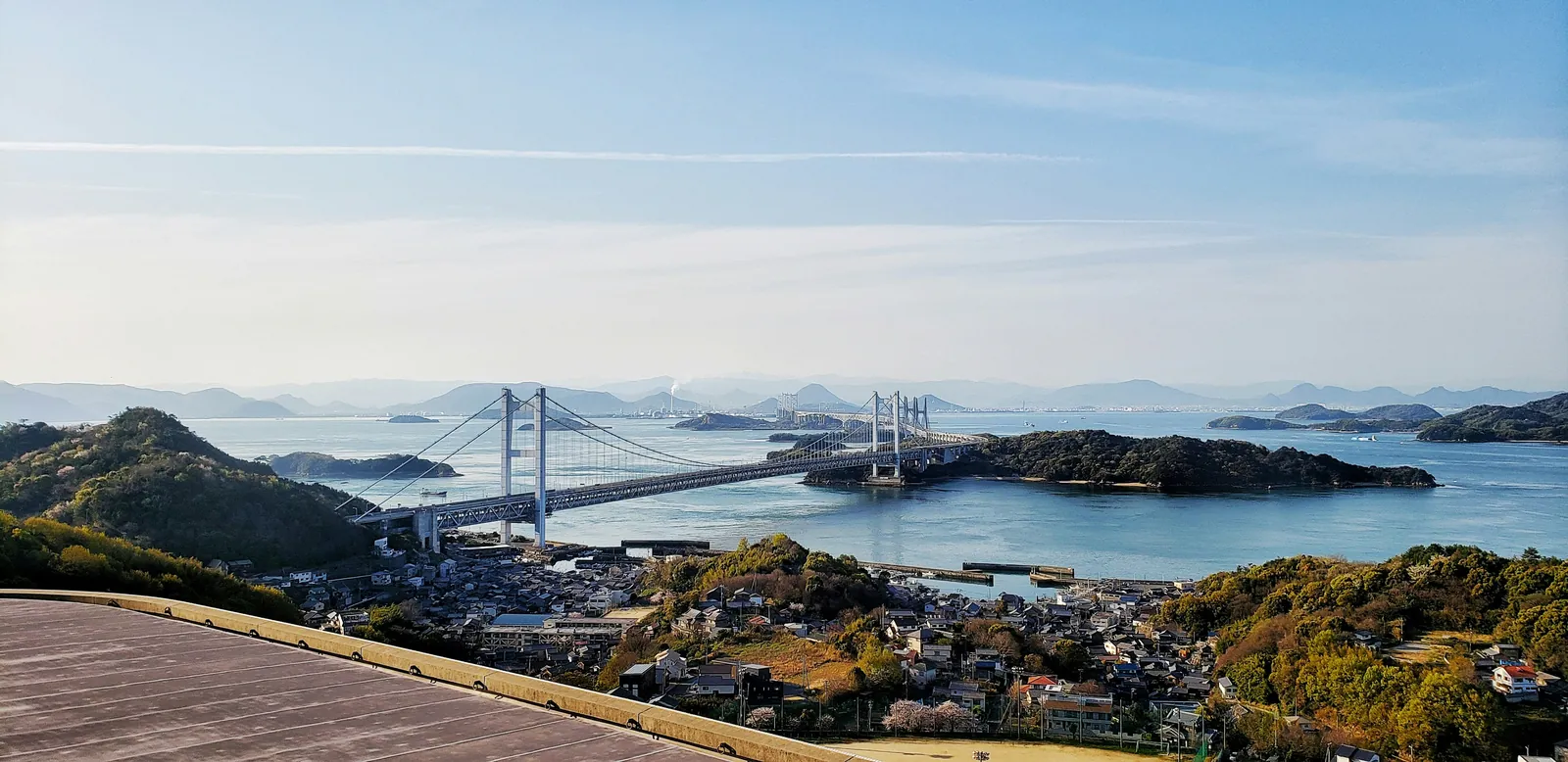
View of the Great Seto Bridge over the Seto Inland Sea from the Washuzan viewpoint, in Kurashiki

Kurashiki: canals, white warehouses and art 15 minutes from Okayama

One of the best-preserved historic centres in western Japan, with an Edo-era merchant quarter around a willow-lined canal, and a coast reaching the Seto Inland Sea.

Kurashiki at a glance

Kurashiki, in Okayama prefecture, preserves one of the most photogenic historic ensembles in western Japan. Its Bikan quarter gathers 17th-century white-walled warehouses (kura) along a willow-lined canal, where merchants once unloaded their rice. Today those warehouses house museums, cafes and craft shops, and traditional boats glide along the water. The city was also a pioneer of Japanese art and textile industry, and that shows in its two great symbols: the Ohara art museum and the ivy-covered brick of Ivy Square. Its boundaries also extend to the Seto Inland Sea, at Kojima, from where the Washuzan viewpoint looks out over the Great Seto Bridge.

Kurashiki works very well as a half-day or full-day trip from Okayama, just 15-20 minutes away by train on the JR Sanyo or Hakubi line. From Osaka it takes around an hour and a half: Sanyo Shinkansen to Okayama (~45 min) and a transfer to the local line. The Bikan quarter is about 10 minutes on foot from Kurashiki station and is explored entirely on foot.

How many days should you spend in Kurashiki? Calculate your budget and split your nights automatically.
Plan my trip →

Key Kurashiki areas

Almost everything is concentrated in the walkable Bikan quarter: the historic canal, the streets of shops and crafts, and the white warehouses that house the Ohara museum.

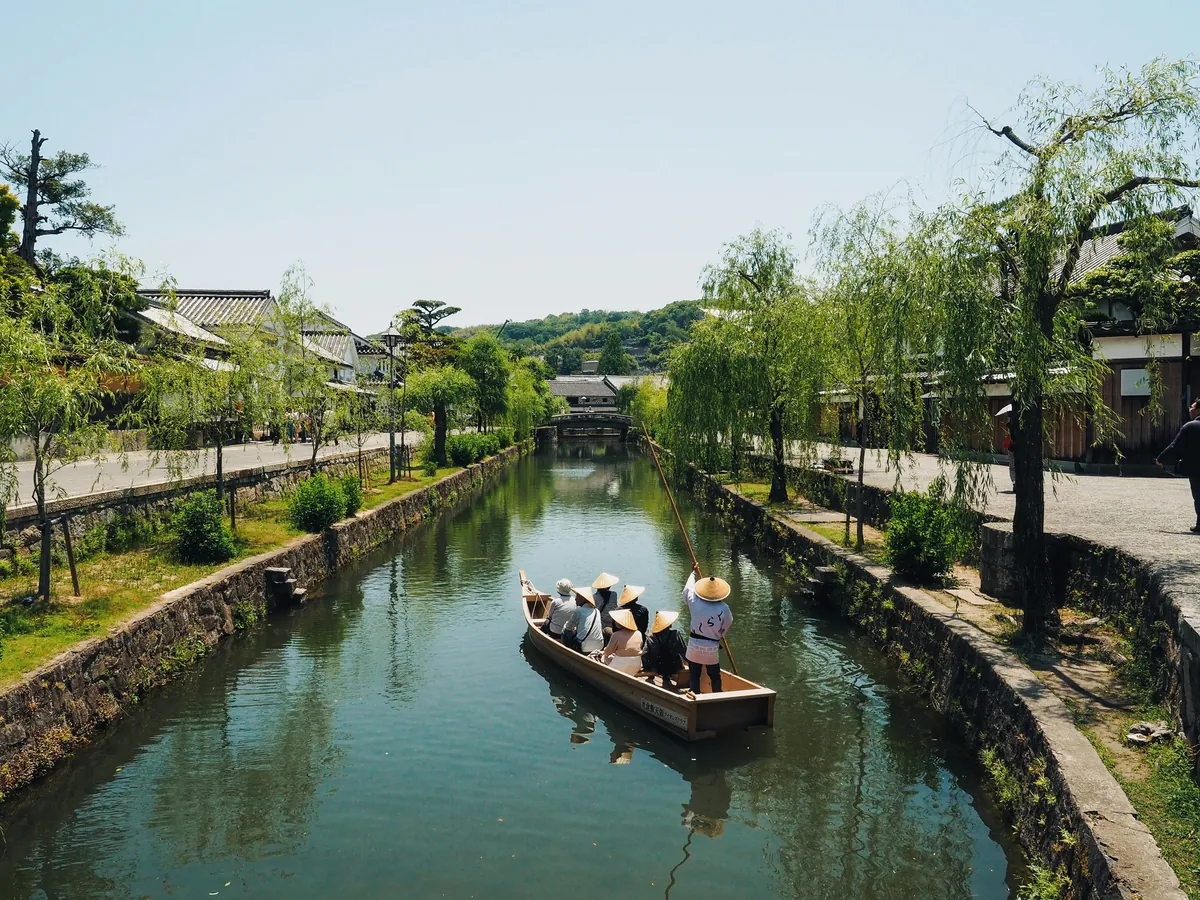
Traditional boat with passengers gliding along the canal of the Bikan quarter among willows, in Kurashiki

The canal of the Bikan quarter

The heart of Kurashiki is a 17th-century merchant district with white-walled warehouses lined up along the Kurashiki river, among willows. The most iconic image is the canal, which you tour by traditional boat — with the boatman poling — or by strolling along its cobbled banks. It is one of the most popular destinations in western Japan and, despite that, keeps a calm rhythm, especially early in the morning.

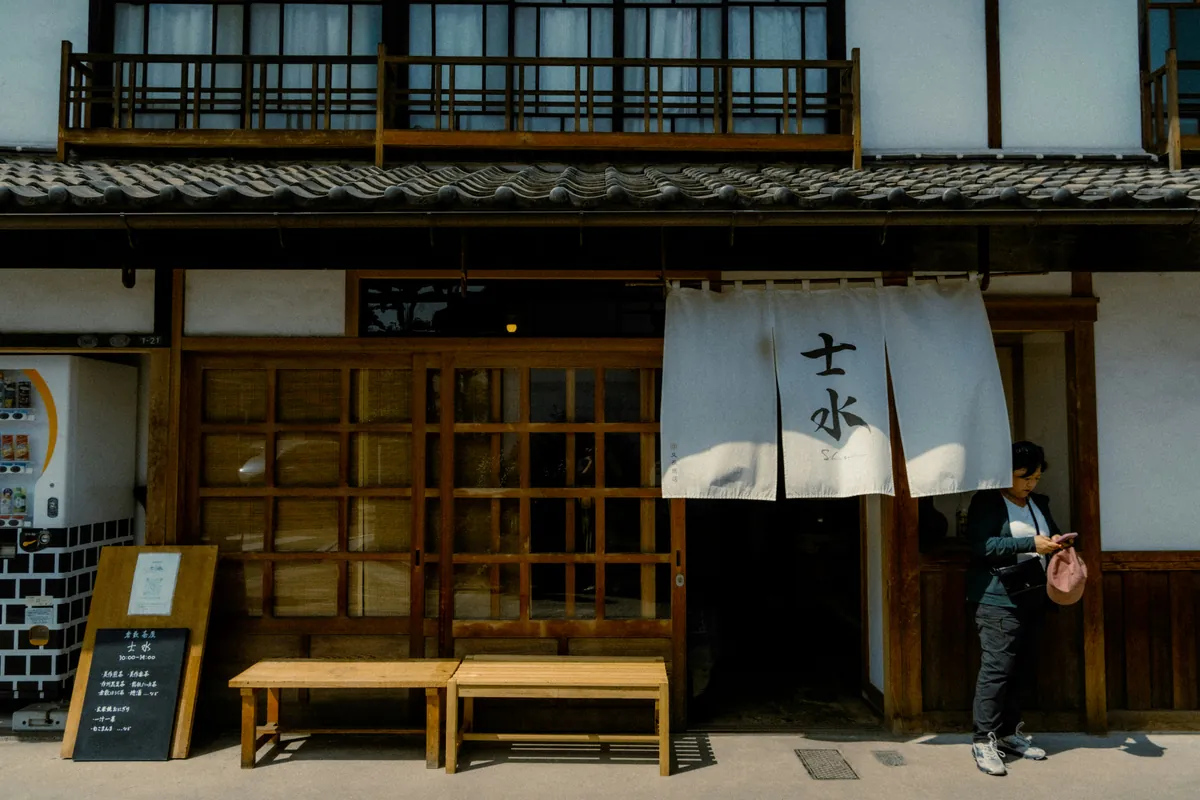
Traditional wooden facade and white wall with a hanging noren, on a street of the Bikan quarter in Kurashiki

Shops, cafes and crafts

Behind the white facades and the fabric noren, the old warehouses and merchant houses of Bikan today house cafes, shops and workshops. Two products very typical of Kurashiki are sold here: blown glass (Kurashiki glass) and the cotton canvas used to make bags and accessories. A step away from the quarter is Ivy Square, a former Meiji-era spinning mill of red brick covered in ivy, converted into restaurants, museums and a hotel.

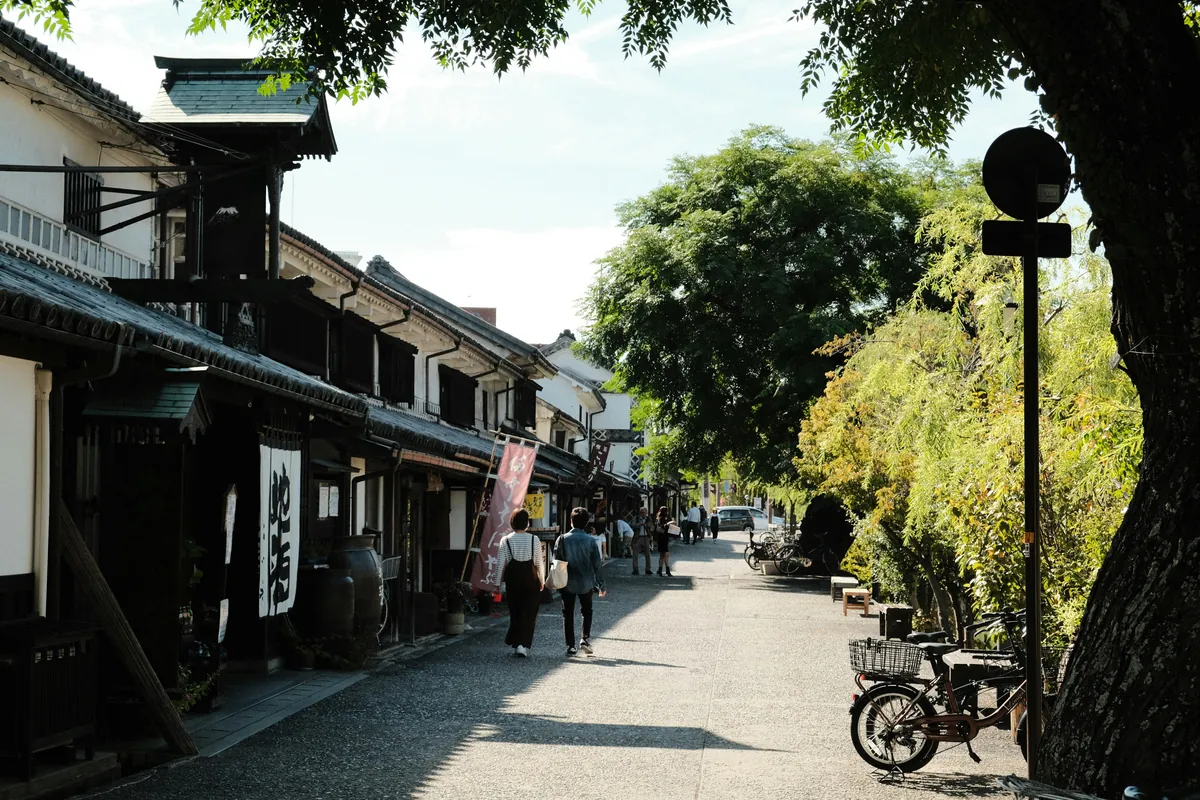
Street of white Edo-era warehouses with passers-by and a willow, in the Bikan quarter of Kurashiki

White warehouses and the Ohara museum

The streets of Bikan are defined by their white-walled, dark-latticed kura, today one of the best-preserved ensembles of merchant architecture in Japan. In the heart of the quarter stands the Ohara art museum, founded in 1930 by the industrialist Magosaburo Ohara: it was the first museum of Western art in the country and gathers masterpieces such as El Greco's "Annunciation" or Monet's "Water Lilies", alongside ceramics and Chinese art. To the south, in Kojima, is the well-known Jeans Street, a mecca of made-in-Japan denim.

Activities and experiences in Kurashiki

Recommended plans, sights and experiences, with budget guidance and direct links.

No activities are loaded for this city yet.

How to fit Kurashiki into your itinerary

Kurashiki fits naturally into the route west between Osaka and Hiroshima, as the Sanyo Shinkansen stops at Okayama, 15 minutes away. It is an ideal stop to break up the journey with half a day of canals and art before continuing towards Miyajima. To see how to place it within your route, check the itineraries by duration.

Travel between cities

How much does the train to Kurashiki cost? Check whether the JR Pass is worth it by adding Kurashiki to your route.
Calculate JR Pass →

Frequently asked questions about Kurashiki

How do you get to Kurashiki?

From Okayama it is only 15-20 minutes by train on the JR Sanyo or JR Hakubi line to Kurashiki station. From Osaka it takes around an hour and a half: Sanyo Shinkansen to Okayama (~45 min) and a transfer to the local line. The Bikan quarter is about 10 minutes on foot from the station. See the Japan transport guide →

Does the JR Pass cover the trip to Kurashiki?

Yes. The Sanyo Shinkansen to Okayama (on Hikari, Sakura or Kodama trains) and the local JR line to Kurashiki are covered by the JR Pass. The Nozomi and Mizuho trains are not included in the basic pass, but there are frequent alternatives that are.

How much time do you need to see Kurashiki?

With half a day you see the essentials of the Bikan quarter, including a boat ride along the canal and entry to the Ohara museum. If you want to add Ivy Square at a relaxed pace or visit the Jeans Street in Kojima, give it a full day.

Is it worth combining Kurashiki with Okayama?

Yes. Okayama, 15 minutes away, has the Korakuen garden — one of the three great gardens of Japan — and its black castle. Many travellers base themselves in Okayama and spend a morning in Kurashiki and an afternoon at Korakuen, or vice versa. See the Hiroshima guide →