

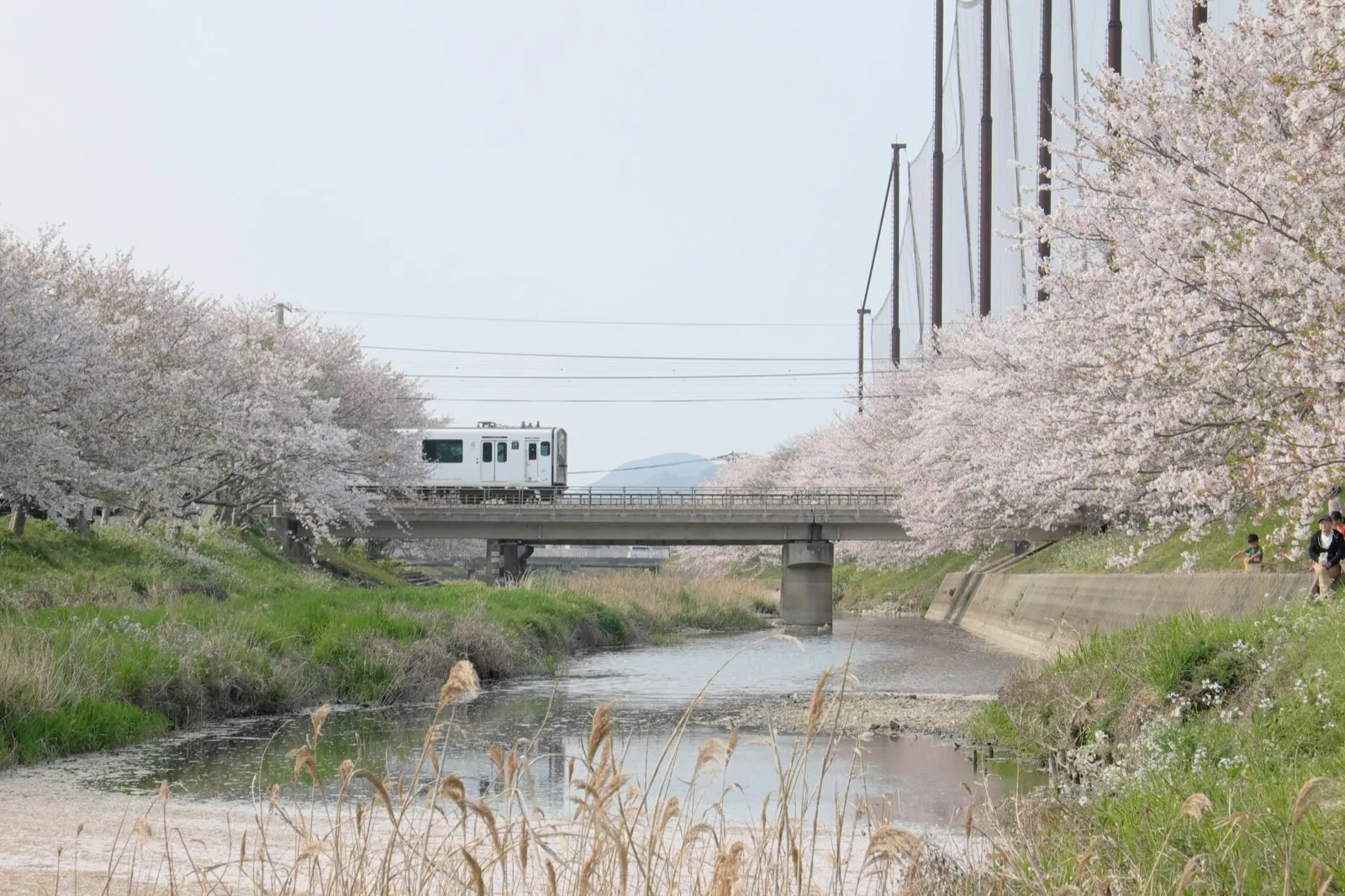
Local train among cherry blossoms by a river in Fukuoka in spring

Fukuoka: ramen, yatai and the liveliest city in southern Japan

Capital of Kyushu, gateway to the south of the country and the Japanese city with the most renowned cuisine outside Tokyo.

Fukuoka at a glance

Fukuoka is the largest city in Kyushu and one of the fastest-growing in all of Japan. Its cuisine — Hakata ramen, karaage chicken, mentaiko — has made it a destination in its own right, not just a stopover. At night, the yatai (covered street stalls) spread out along the Naka river and create an atmosphere impossible to find in any other city in the country.

Fukuoka works as a standalone destination of 2-3 nights or as a base for exploring Kyushu. It has an international airport just two metro stops from the centre and a direct shinkansen connection with Osaka (2h 15 min on the Nozomi) and Tokyo (about 5h). It is the southern end of the classic axis and a good point to extend the trip towards Nagasaki or Beppu.

How many days should you spend in Fukuoka? Calculate your budget and split your nights automatically.
Plan my trip →

Key Fukuoka areas

Fukuoka is split between Hakata (station, temples and tradition), Tenjin (the shopping and entertainment centre) and Nakasu (the entertainment island between two rivers, famous for its yatai). The metro connects the three in under ten minutes.

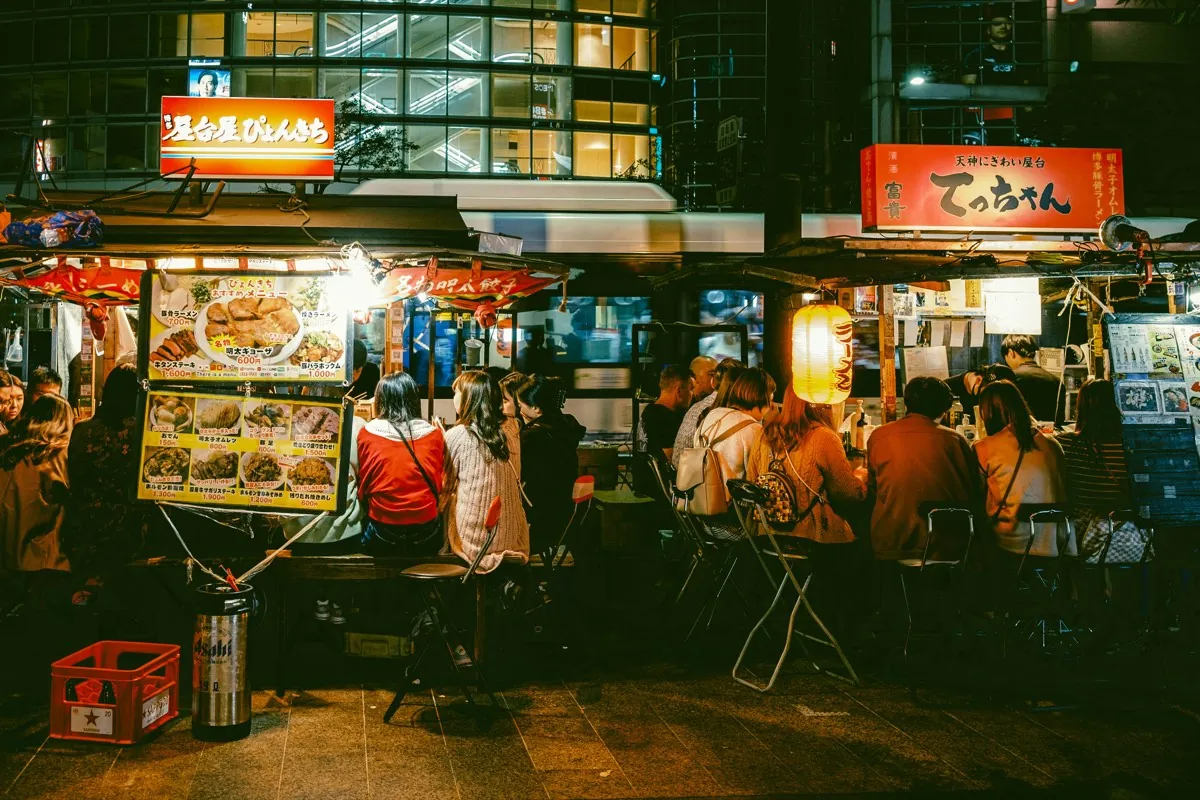
Illuminated night-time yatai by the river in Nakasu, Fukuoka

Nakasu and the yatai

The island of Nakasu holds more than a hundred yatai — small covered stalls with a counter — that open as night falls. The essential dish is Hakata ramen: cloudy pork broth (tonkotsu), thin noodles and spring onion. The experience of eating elbow to elbow with locals and tourists under a plastic awning is unique in Japan.
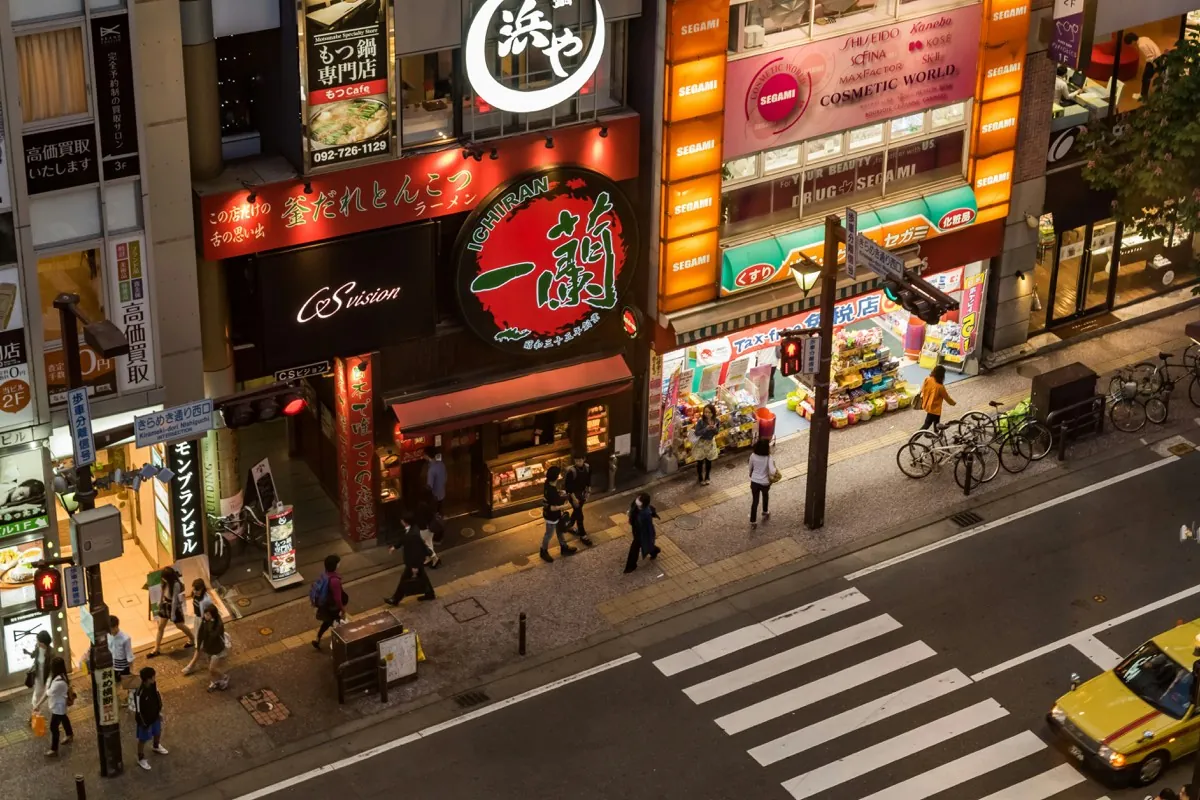
Illuminated Ichiran ramen branch on a Fukuoka street

Hakata ramen and Ichiran

Fukuoka is the birthplace of tonkotsu ramen (cloudy pork broth) and of now-global chains such as Ichiran, founded here. In Hakata you can try it in its original branches, in the yatai or at the distinctive individual booth with a curtain that Ichiran made popular.

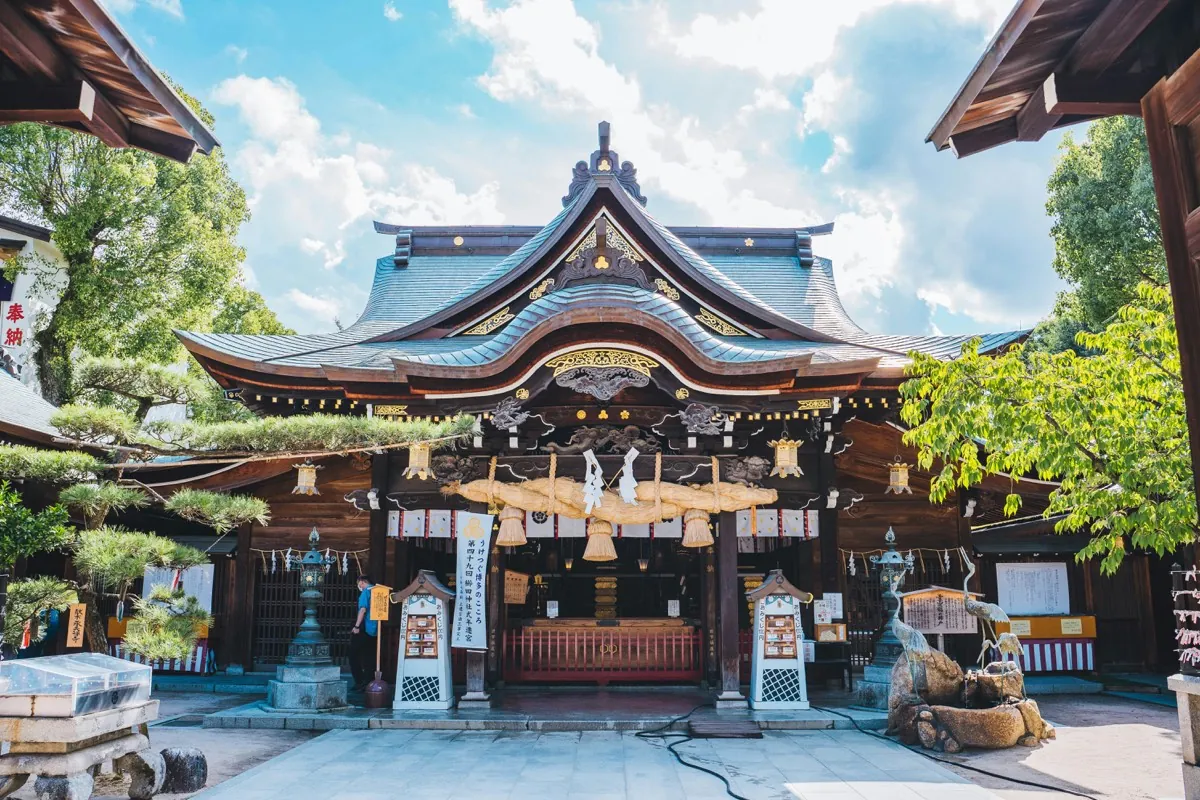
Kushida shrine (Kushida-jinja) in the Hakata district, Fukuoka

Kushida Shrine

Kushida shrine is the spiritual heart of Hakata and the home of the Hakata Gion Yamakasa, the spectacular float festival of July. A large yamakasa float and a monumental shimenawa are on display in its grounds, a few minutes on foot from the centre and Canal City.

Activities and experiences in Fukuoka

Recommended plans, sights and experiences, with budget guidance and direct links.

Dazaifu Tenmangu (the shrine of students)
Temples & castles, Viewpoints · The most visited shrine in Kyushu, dedicated to the god of learning Tenjin, with a garden of centuries-old plum trees and a museum; free access.
Free
Ohori Park (the lake in the centre of Fukuoka)
Nature · Urban park with a large artificial lake surrounded by cherry trees and island walkways; free access, rowing boats ~600 ¥/hour.
Free
Day trip to Itoshima from Fukuoka
Nature, Viewpoints · Day trip to the Itoshima coast, Fukuoka's little Hawaii, with married rocks, seaside swings and photogenic spots; from around 8.000 ¥.
5.000 - 10.000 JPY
Day trip to Yufuin and Beppu from Fukuoka
Nature, Onsen · Day trip from Fukuoka to the famous hot-spring towns of Yufuin and Beppu, with Beppu's steaming hells; tour from around 9.000 ¥.
5.000 - 10.000 JPY
Marine World Uminonakamichi (aquarium)
Animals · The largest aquarium in Kyushu, with a great shark tank, dolphins, sea lions and sea otters; admission around 2.500 ¥.
2.500 - 4.999 JPY
Hakata ramen (tonkotsu, the cradle of pork-broth ramen)
Gastronomy, Tradition · Fukuoka is the cradle of tonkotsu ramen, with a creamy white pork-bone broth; bowl from 700-900 ¥ in the ramen-ya of the Hakata district.
1 - 1.499 JPY

How to fit Fukuoka into your itinerary

If your route follows the classic Tokyo-Kyoto-Osaka line, Fukuoka adds only 2h 15 min by shinkansen from Osaka and offers a completely different experience. It can be combined with Hiroshima, which is on the way west. From Fukuoka it is also easy to make day trips to Beppu (onsen), Nagasaki or the island of Yakushima for those with more time in Kyushu. To see whether it is worth adding, check the itineraries by duration.

Travel between cities

How much does the train to Fukuoka cost? Check whether the JR Pass is worth it by adding Fukuoka to your route.
Calculate JR Pass →

Frequently asked questions about Fukuoka

How many days do you need in Fukuoka?

With 2 nights you have time for Nakasu, Hakata and Dazaifu. If you want to explore more of Kyushu (Beppu, Nagasaki) it is worth staying an extra night and using it as a base.

How do you get to Fukuoka from Osaka or Tokyo?

By shinkansen from Shin-Osaka the Nozomi takes about 2h 15 min and the Sakura (covered by the JR Pass) about 2h 45 min. From Tokyo the direct journey is around 5 hours, so many travellers prefer to fly: Fukuoka airport is two metro stops from the centre. See the Japan transport guide →

Does the JR Pass cover the Shinkansen to Fukuoka?

Yes. The Nozomi shinkansen is not covered, but the Hikari and the Sakura are. From Osaka (Shin-Osaka) the journey on the Sakura takes approximately 2h 45 min and is included in the JR Pass. Work out whether the JR Pass is worth it →

What should you eat in Fukuoka?

The star dish is Hakata ramen: cloudy pork broth (tonkotsu) with thin noodles, served at the Nakasu yatai. Other essentials are karaage chicken, mentaiko (spicy cod roe) and motsunabe (offal hotpot). Eating at a yatai, elbow to elbow under the awning, is a unique experience in Japan.

When is the best time to visit Fukuoka?

Spring (cherry blossoms in March-April in Maizuru park) and autumn are ideal for the weather. July brings the Hakata Gion Yamakasa festival, one of the most spectacular in Japan. Summer is very humid but the yatai are in full swing. See when to travel to Japan →