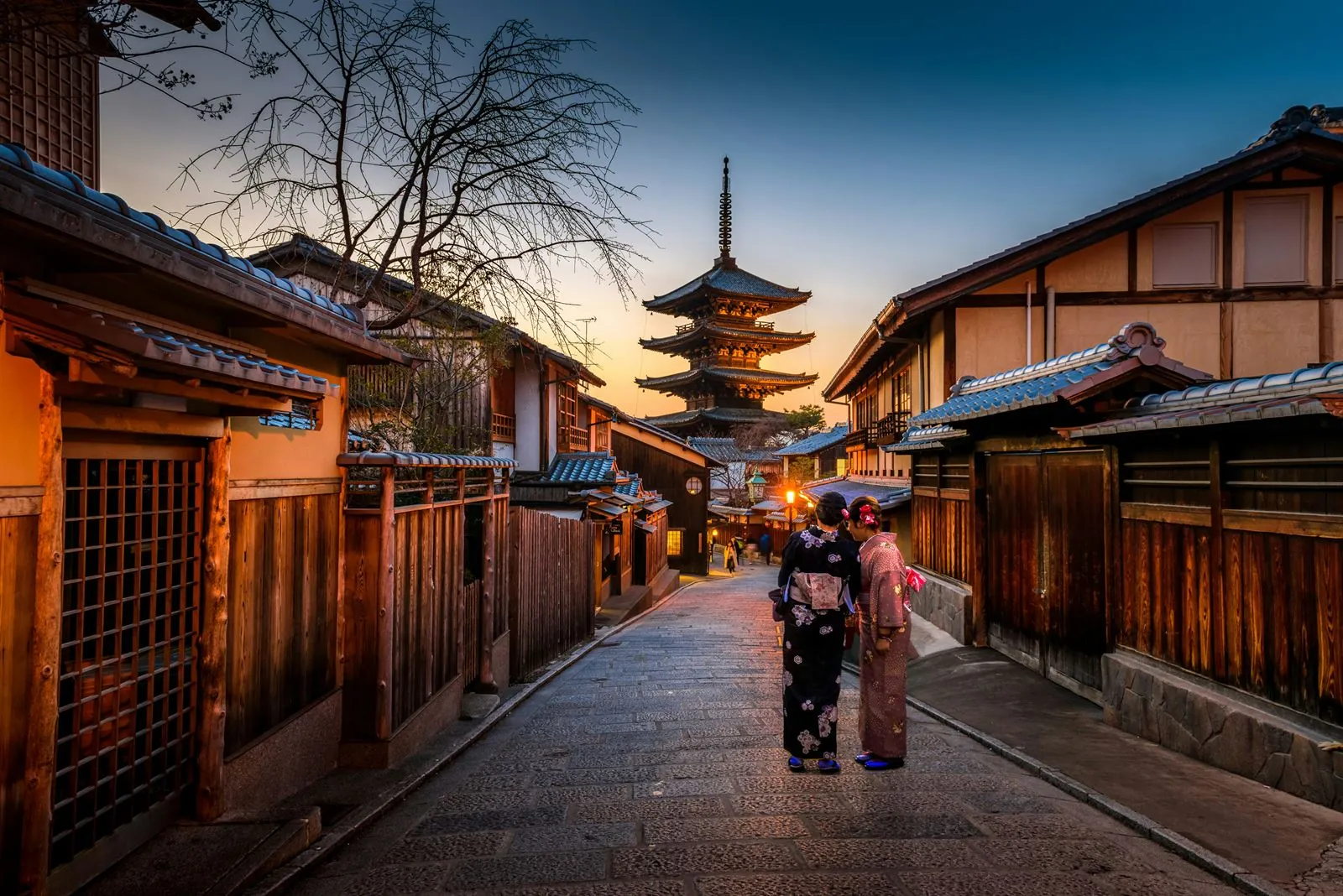
Traditional Kyoto street with wooden facades, the setting of the Gion geisha district

Seeing geishas in Gion: where, when and how

The maiko and geiko of Kyoto walk through Gion every evening. This guide explains how to see them respectfully and without disturbing them.

The geishas of Kyoto are called geiko, and their apprentices, maiko. They are artists trained for years in music, dance, tea ceremony and conversation. They work in the ochaya (tea houses) of the Gion district, and you can see them walking through the streets at dusk on their way to their engagements. It is not easy — but not impossible either if you know where and when to go.

Maiko and geiko: what is the difference

In Kyoto specific terminology is used that differs from the generic term "geisha" (more used in Tokyo and other cities):

  • Maiko: apprentice geiko. Usually between 15 and 20 years old. They are recognised by the more colourful kimono, the very long obi (sash) that falls down the back, the more elaborate make-up and the kanzashi (flower) ornaments in the hair.
  • Geiko: experienced geisha. A more sober kimono, more discreet make-up, a wig instead of natural lacquered hair. They have at least 5 years of training.

Maiko are easier to identify by their striking appearance. Geiko are harder to tell apart from a Japanese woman in a formal kimono if you do not know exactly what to look for.

Where and when to see them

Gion is home to two of the five hanamachi (geisha districts) of Kyoto:

  • Gion Kobu: the largest and most prestigious, and the one with the most ochaya. The Hanamikoji street is the classic spot — cobbled, with wooden facades, lanterns and the exit of several ochaya on the same block. It is where the probability of seeing maiko or geiko is highest.
  • Gion Higashi: the smallest of the five hanamachi, right next to Gion Kobu but considerably quieter. It also has active ochaya.

The other three hanamachi (Pontocho, Miyagawacho and Kamishichiken) are outside Gion; we review them below. Near Gion, the Pontocho alley and the quiet bank of Shirakawa are also good spots for a dusk sighting.

The most likely time to see them is between 17:30 and 19:00, when they walk from their okiya (geisha houses) to the ochaya where they work that night. On Sunday mornings it is also possible to see them on their way to dance or music classes.

There are no fixed times or guarantees. They go out less on rainy days. In high season (sakura and momiji) there is more activity.

How to behave: the rules you need to know

The harassment of some tourists (chasing maiko, pulling at their kimono, planting themselves in front for selfies) led in October 2019 to the Gion residents' and traders' association banning photos in the private streets of the district, with fines of up to 10,000 ¥. In 2024 it was reinforced with multilingual signage warning of the same fine for entering those private streets without authorisation. On the public streets (such as Hanamikoji or the Shirakawa bank) you can take photos, but the rules of respect are the same throughout Gion:

  • Do not follow or block the way: maiko and geiko are going to work. Getting in their path to photograph them is disrespectful and, in some cases, illegal.
  • Do not touch them: touching a maiko's kimono or make-up to photograph yourself is completely prohibited.
  • Photograph from a distance: if you want a photo, take it from afar and without flash. Do not plant yourself in front with your phone 30 centimetres away.
  • Do not talk to them in the street: they are not available for conversation outside the ochaya. A respectful nod is enough. If you want to arrive with the right cultural context, review the customs and etiquette in Japan.

The maiko and geiko you see in Gion are not a tourist attraction — they are professionals on their way to work. Treat it exactly as if you crossed paths with any other person.

It is also worth knowing that many of the women in kimono and white make-up seen and photographed around Gion are tourists who have booked a transformation session, not real geiko or maiko. A real maiko walks quickly and with a purpose, almost always accompanied or alone, without posing; she is rarely seen in broad daylight stopping for photos.


Alternatives: official shows and experiences

If you want a real interaction with the world of the geishas, there are legitimate options:

  • Gion Corner theatre (Yasaka Hall, next to the Gion Kobu Kaburenjo): a one-hour show in which a maiko performs the kyomai dance alongside other Japanese performing arts (tea ceremony, koto, ikebana, gagaku, kyogen, bunraku). General adult entry is around 5,500 ¥ (ages 16 to 22, ~3,850 ¥; check the current rate on the official website). It is the most accessible way to see a maiko performing. Shows at 18:00 and 19:00; reduced schedule from December to mid-March.
  • Ozashiki (banquet at an ochaya): dining at an ochaya with maiko or geiko is the most authentic experience, but requires an invitation from a regular client or a booking through certain luxury hotels in Kyoto. Price: 50,000–100,000 ¥ per person.
  • Maiko experience (transformation): several studios in Gion offer the experience of dressing as a maiko with professional make-up and doing a photoshoot. It is not the same as seeing a real maiko, but it is an interesting photographic and cultural experience. Price: 10,000–20,000 ¥.

The five hanamachi: beyond Gion

Although Gion is the most famous geisha district, Kyoto preserves five active hanamachi (geisha districts). Knowing them gives you more chances to see maiko and geiko, and often with fewer tourists around:

  • Gion Kobu: the largest and most prestigious, with the Hanamikoji street as its axis. The one with the most ochaya and where the chance of a sighting is greatest.
  • Gion Higashi: the smallest of the five, next to Gion Kobu but quieter.
  • Pontocho: a narrow, atmospheric alley by the Kamogawa river, full of restaurants with terraces over the water in summer (kawayuka). One of the most beautiful to stroll at dusk.
  • Miyagawacho: south of Gion, less touristy and with a more everyday atmosphere. A good alternative to avoid the Hanamikoji crowds.
  • Kamishichiken: the oldest hanamachi in Kyoto, next to the Kitano Tenmangu shrine, in the northwest. The furthest from the usual tourist circuit.

Each hanamachi holds its odori every spring (public dance shows by maiko and geiko), such as the Miyako Odori of Gion Kobu or the Kitano Odori of Kamishichiken. They are the most accessible and respectful way to see the geishas perform: the dates are concentrated in April, so they fit well if you plan the trip in sakura season.

Activities to book

Experiences related to this guide. Book ahead to secure your spot on your travel dates.

Maiko show and dinner
Kyoto · Events, Gastronomy, Tradition · Dinner with a performance by a maiko (apprentice geisha) in a private ozashiki; usual price 10.000-15.000 ¥.
5.000 - 10.000 JPY
Maiko make-up and photo session (henshin)
Kyoto · Tradition, Workshops · Transform into a maiko with kimono, white make-up and traditional hairstyle, with a studio photo session; experience from around 3.000 ¥.
2.500 - 4.999 JPY
Plan your visit to Kyoto and Gion The planner works out how many days in Kyoto you need and generates the full itinerary with a budget.
Plan my trip

More travel guides

Frequently asked questions

Is it easy to see geishas in Kyoto?

It is not guaranteed, but if you go to Hanamikoji between 17:30 and 19:00 you have a good chance, especially on weekdays. In high season (April and November) there is more activity at the ochaya. See when to visit Kyoto to know what to expect at each time.

Can I photograph the geishas in Gion?

On the private streets of Gion it is forbidden to photograph them, with fines of up to 10,000 ¥. On public streets it is allowed, but always from a distance and without blocking their way. Do not talk to them or get in their path.

What is the difference between maiko and geiko?

The maiko is the apprentice (15–20 years old), recognisable by the very colourful kimono, the long obi falling down the back and the kanzashi ornaments in the hair. The geiko is the experienced geisha, with a more sober kimono and more discreet make-up. In Kyoto the term geiko is used instead of the generic "geisha".

Is there a show where you can see the geishas perform?

Yes. The Gion Corner theatre offers a one-hour show with the kyomai dance of a maiko alongside other traditional Japanese arts (koto, ikebana, kyogen, bunraku). General adult entry is around 5,500 yen. It is the most accessible way to see them perform without access to a private ochaya. In addition, every spring the five hanamachi hold their odori (public dances), such as the Miyako Odori of Gion Kobu in April.

How many active geishas are there in Kyoto?

Around 200–260 between geiko and maiko (the maiko, the apprentices, number about 50 depending on the source and year), spread across the five hanamachi (geisha districts) of Kyoto: Gion Kobu, Gion Higashi, Pontocho, Miyagawacho and Kamishichiken. Gion Kobu alone gathers about 70 geiko and 30 maiko. The number has dropped drastically since the 20th century (there used to be thousands) but Kyoto is still the main centre of the tradition.

What time is best to go to Hanamikoji?

Between 17:30 and 19:00 is the window with the most chances. The maiko and geiko walk from their okiya to the ochaya where they work that evening. On Sunday mornings it is also possible to see them on their way to classes. Avoid midday: they do not go out at that hour.

How much does it cost to dine with geishas in Kyoto?

An ozashiki (banquet at an ochaya with maiko or geiko) costs between 50,000 and 100,000 ¥ (~280–560 €) per person. It requires an invitation from a regular client or a booking through certain luxury hotels. It is one of the most exclusive cultural experiences in Japan.

Can you do the maiko-dressing experience in Kyoto?

Yes. Several photography studios in the Gion district offer the full transformation: kimono, maiko make-up and an outdoor photoshoot. The price is around 10,000–20,000 ¥ (~55–110 €). It is not the same as seeing a real maiko, and it is worth remembering that many of the "geishas" seen posing in Gion are actually tourists with this type of session.