
What an onsen is (and how it differs from a sento)
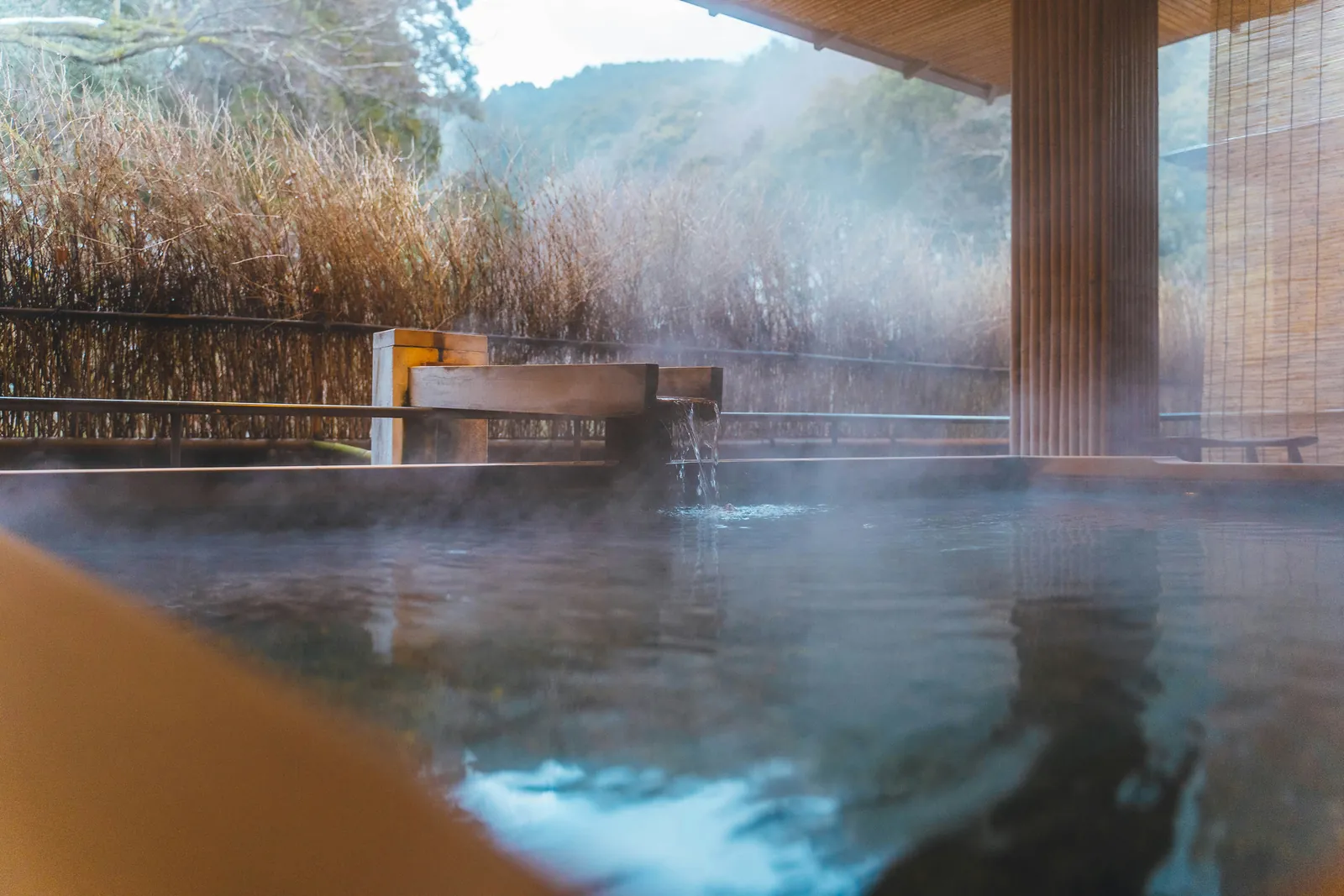
An onsen is a bath that uses natural thermal water: geothermal water, hot and rich in minerals, that springs from Japan's volcanic subsoil. It is not a tourist gimmick, but a deep part of the country's culture: Japan sits on volcanic terrain that feeds more than 25,000 hot springs from Hokkaido to Kyushu, and bathing in them is a centuries-old tradition reputed to be relaxing and good for the skin.
It should not be confused with a sento. The sento is the neighbourhood public bath: it uses heated tap water, not natural thermal water. For a bath to be legally called an onsen, Japanese law requires the water to spring from the ground at 25 °C or more at its source, or to contain at least one of the recognised minerals (sulphur, iron, sodium and the like) at a certain concentration. The sento does not meet that requirement, and tends to be a more urban, everyday place. The etiquette for using them, however, is practically the same.

